


UKRS Accredited Postgraduate Diploma in Integrated Fascia Therapy
Equine and/or Canine
The Postgraduate Diploma in Integrated Fascia Therapy is an advanced, professionally focused programme designed for practitioners working with horses or dogs who wish to deepen, evolve, and critically refine their therapeutic practice.
This course delves into the multifaceted roles of fascia across all body systems, enabling practitioners to analyse primary imbalances, differentiate compensatory patterns, and evaluate their wider systemic and behavioural impacts. Through a behaviour led and whole body multi-factored approach, students are supported to work holistically while maintaining precision and clinical relevance.
Combining online learning and lectures, in-person practical training days with applied case-based work, this programme supports the development of independent, reflective practitioners capable of integrating advanced fascia-based concepts into real-world practice.
We are expecting to have enough interest to run two cohorts: one in Oxfordshire and one in Somerset.
Tutors: Becky Baylis (Animal Physiotherapist), Louise Mauferon Vernet (Animal Osteopath), Jo Rose (holistic/MSK Practitioner). To provide the best learning experience, we allow no more than 12 students on each cohort.
CONTACT US IF YOU HAVE QUESTIONS OR WOULD LIKE TO BOOK ON

Who This Course Is For?
This postgraduate diploma is suitable for qualified animal manual practitioners seeking to:
-
Evolve their existing practice through advanced fascia-based work
-
Develop a more integrated, behaviour-led therapeutic approach
-
Enhance clinical reasoning, critical thinking and professional confidence
-
Produce an authoritative, self-initiated body of applied work within their chosen species (horse or dog)
Qualification:
Postgraduate Diploma in Integrated Fascia Therapy: Equine/CanineDates 2027 soon to be announced, starting with the on-line module in January with online access to resources, comprising of….
Home-study unit 1 plus a live Zoom Q and A session, then 4 onsite tutorials approx 2 months apart with live Zoom seminars / Q and A at the half way point between them. Optional additional mentor session between units 4 and 5.Course Format:
Blended learning programme combining online lectures, guided study, in-person practical training days, and applied case work.Practical Training Location:
With a total of eight practical days all hosted at Rose Holistic Therapies and Training, OxfordshireInvestment: £2,400
Payable in instalments over the duration of the course
A non-refundable £400 deposit is required to secure your place. An early-bird discount of £200 applies to those enrolling before the 14th October.Species Pathway:
Equine (Horse) or/and Canine (Dog)
Places on this postgraduate programme are limited to ensure a high level of individual support, depth of learning and practical supervision. UKRS accredited certification. We cap our cohort intake at 12 students, so that they can benefit fully from the support of the 3 specialist tutors.
The online unit 1 element will open in January.
There will be continued online elements for each unit along with the following practical tutorials in one of the locations…
Somerset…
20th and 21st of March
8th and 9th of May
17th and 18th of July
18th and 19th of September
Oxfordshire…
15th and 16th of April
13th and 14th of May
8th and 9th of July
3oth of September and 1st of October
We are offering a £200 early-bird discount for those enrolling before October 19th, meaning that the enrolment fee will be £200 instead of £400.
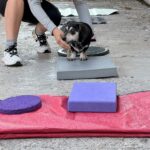
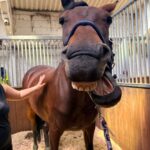
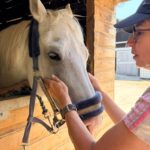
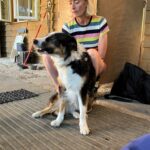
Graduate testimonial from Luisa Greig, Mctimoney and Galen Myotherapy practitioner…
The Integrative Fascia Therapy Diploma is unlike any course I’ve previously done.
Incredibly comprehensive, but structured in a thoughtful way that layers up information and learning.
It offers incredible value.
It’s truly holistic, offering a huge ‘technique menu’ and scope of treatment. It’s changed, or rather deeply developed the way I assess and treat.
At the heart of the course is working with the body and animals in a deeply respectful way, truly listening and supporting, with emphasis on nervous system safety to facilitate positive change.
The tutors have a wealth of knowledge and experience between them, and teach in a supportive, relaxed, nurturing, fun, insightful way. Our individualities in the way we work are actively encouraged and developed. I felt truly supported, seen and encouraged. They are your team of cheerleaders as well as tutors.
Course Aims
This programme aims to enable students to:
-
Critically analyse the structure, function and adaptability of fascia within the context of equine or canine health and behaviour
-
Investigate and appraise complex movement patterns, postural adaptations and behavioural presentations
-
Develop and apply integrated fascia therapy strategies that address both primary imbalances and compensatory systems
-
Evaluate and justify therapeutic choices using evidence-informed reasoning and reflective practice
-
Design and implement effective, ethical and adaptable treatment approaches that enhance professional practice
Learning Outcomes
By the end of the programme, students will be able to:
-
Analyse, examine and differentiate fascial dysfunctions and their relationship to movement, behaviour and systemic health
-
Apply a detailed and coherent understanding of fascial anatomy, physiology, materials, techniques and technologies to clinical practice
-
Assess and evaluate behavioural cues and responses as integral components of treatment planning
-
Formulate and propose solutions to complex, case-based problems using an integrated fascia therapy framework
-
Design, develop, and manage treatment plans that are adaptable to individual animals and evolving clinical presentations
-
Critically evaluate information from a range of sources and justify clinical decisions both verbally and in writing
-
Demonstrate reflective and independent practice through self-initiated applied work and case studies
 Teaching & Learning Approach
The programme adopts a blended learning model that supports depth, flexibility and applied learning:
-
Online lectures and guided study to introduce, examine and critically explore key concepts
-
Practical training days focused on the application, demonstration and testing of techniques
-
Case-based learning and discussion to encourage debate, questioning and problem-solving
-
Reflective and evaluative tasks to support synthesis, professional growth and independent thinking
If you are ready to deepen your understanding of fascia, refine your clinical reasoning, and evolve your practice through an integrated, behaviour-led approach, we invite you to apply.
For further details or to request an enrolment form, please contact us directly.
Course units:
Unit 1: Online learning, utilising a wide range of current research papers and recorded lectures to delve into the physiology of fascia.
Unit 2: A mix of online and two days of practical learning on Myofascial Release topics and techniques.
Unit 3: A mix of online and two days of practical learning, focusing on fascia release and regulation tools… fascia edge tool, tuning forks, photobiomodulation and kinesiology taping.
Unit 4: A mix of online and two days of practical learning on craniosacral therapy and visceral applications.
Unit 5: A mix of online and two days of practical learning on positional release and the osteopathic triangulation approach.
Appropriate home learning exercises are provided in relation to units 1 – 4.
Throughout this learning experience, you will explore….
-
The components of fascia
-
Structural support, energy storage, msk movement, tensegrity, thixotropy theories, nociceptors, serotonin feedback loop
-
Sensory innervation
-
First aid, immune response, fluid transport
-
Communication medium… cellular receptors, mechanoreceptors, mechanotransduction
-
Myofibroblasts: repair or fibrosis
-
Somatic / autonomic innervation.
-
Visceral fascia
-
Relationship to nerve plexuses
-
Interaction with circulation and muscle tissue
-
Interaction with the nervous system, including vagus nerve
-
Interaction with the microbiome / consideration for gut health
-
Interaction with the lymphatic system
-
Kinetic chains
-
Basic release techniques for home practice
-
Mechanical /emotional / biochemical / internal and external environmental stress
-
Densification and fibrosis: the impact on the body and mind (the cycle of tension)
-
Sustained tissue holds: the indirect Myofascial Release approach
-
Joint compression / distraction
-
Realignment (key msk junctions)
-
Direct quick fire techniques to stimulate nervous system reset or local reorganisation of tissue
-
Rhythmic applications to aid fascia reorganisation
-
Tools: Fascial edge tool, Tuning forks, Taping, Red light
-
Neurosomatic reset (unwinding/ emotional releases)
-
The relationship between interoception, exteroception, proprioception and fascia reorganisation.
-
Visceral holds and ligament release
-
Nerve plexus holds, including vagus nerve
-
Cranial nerves … structural and functional influences
-
Cranial applications for global alignment and balancing nervous system
-
Triangulation: locating and treating primary dysfunctions
-
Scar / fascia interaction and treatment
-
Managing your emotions and energy prior, during and post session: being the observer/ listener.
-
Owner/ client relationship


